5 Simple, Low-Prep Ways to Teach Fish in a Tree in Fifth Grade
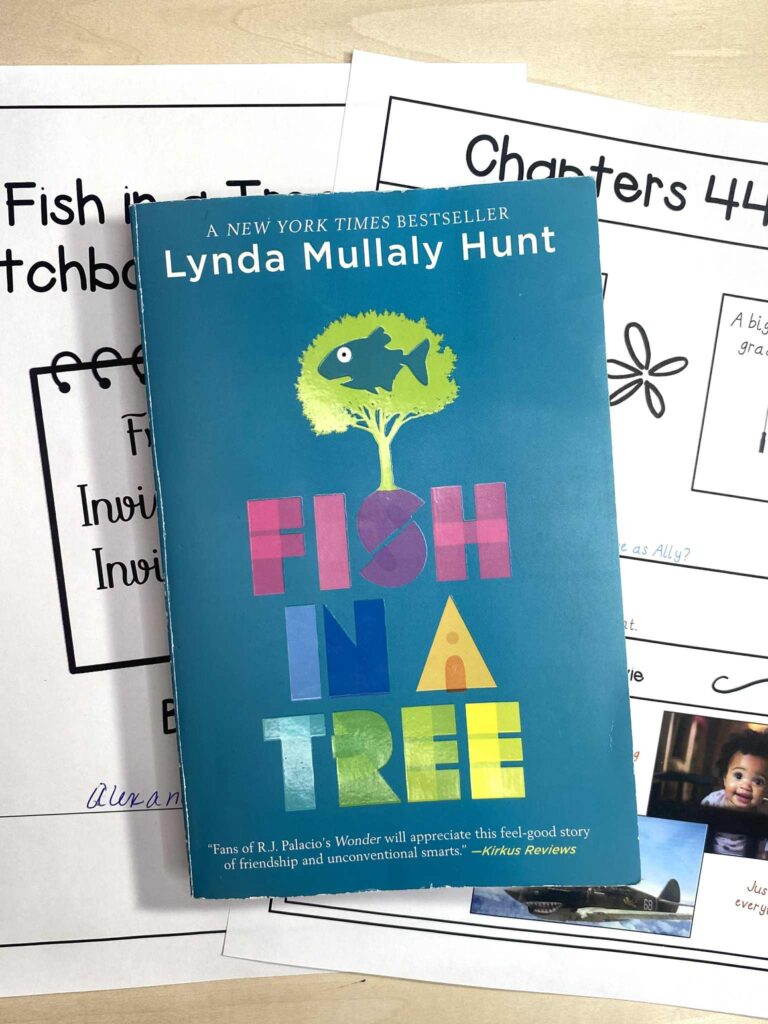
If you teach any upper elementary grade, you already know the magic of Fish in a Tree by Lynda Mullaly Hunt. My fifth-grade students love this novel, whether I read it aloud to them or we read it together. They connect with Ally immediately; her humor, her frustration, and her quiet determination feel so real. The book is full of powerful themes (confidence, kindness, perseverance, learning differences). But because it has so many relatable themes, it can also be challenging to teach without turning it into a large, prep-heavy unit.
If you’re looking for Fish in a Tree lesson plan ideas that feel meaningful and manageable, here are five simple strategies that keep students engaged while still checking comprehension along the way.
Keep your Fish in a Tree comprehension checks short, consistent, and predictable
You don’t need an overwhelming packet to know whether students understand the reading. Instead, use a quick routine after each chunk of chapters:
3–6 questions max
a mix of literal and inferential
at least one text-evidence question
This keeps your reading block moving along and your students enjoying the novel, without having to spend your evenings creating a huge project.
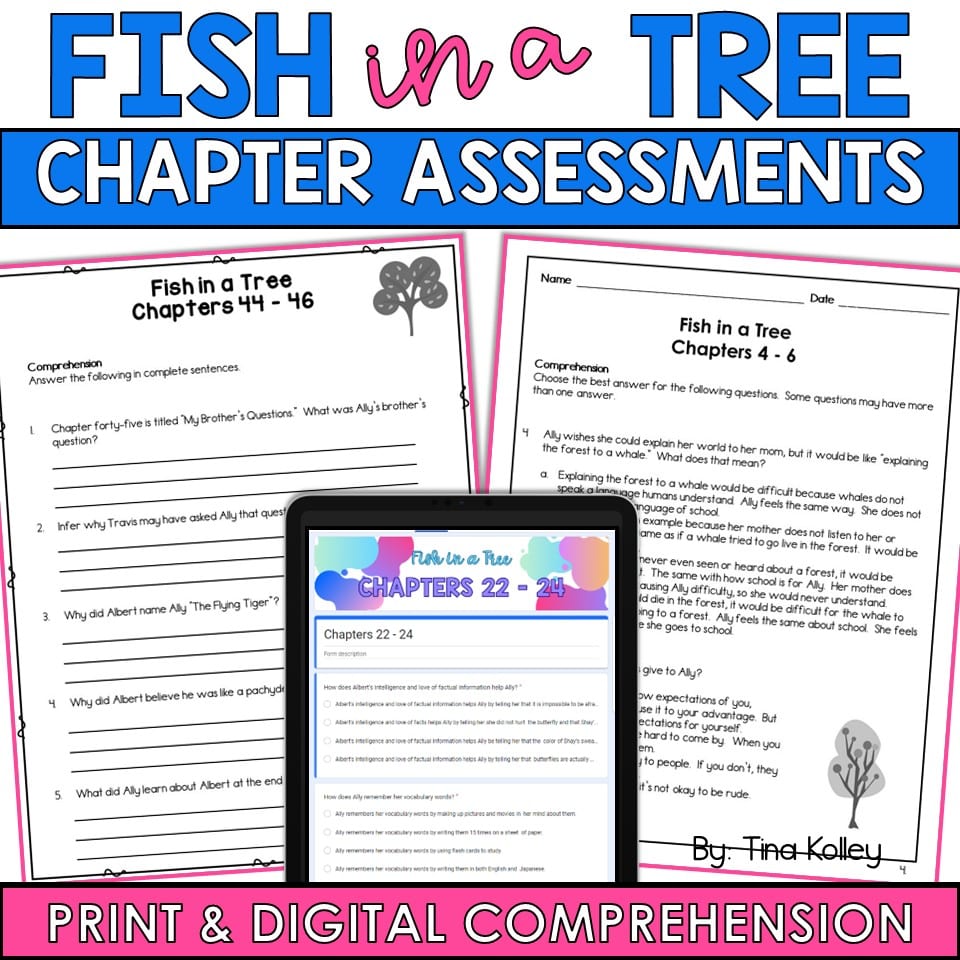
Use multiple-choice chapter checks for quick Fish in a Tree comprehension feedback
Multiple-choice questions get a bad rap sometimes, but they’re incredibly useful when you want fast, clear information. I love using multiple-choice chapter checks to:
spot misconceptions quickly
hold students accountable (in a low-stress way)
guide my teaching
Quickly checking for comprehension every few chapters while reading Fish in a Tree is a must for student to get the most out of their reading.
Add weekly Fish in a Tree activity ideas that students will love
This is where connection and engagement can go way up! Choose one extended activity a week and rotate through easy options, like:
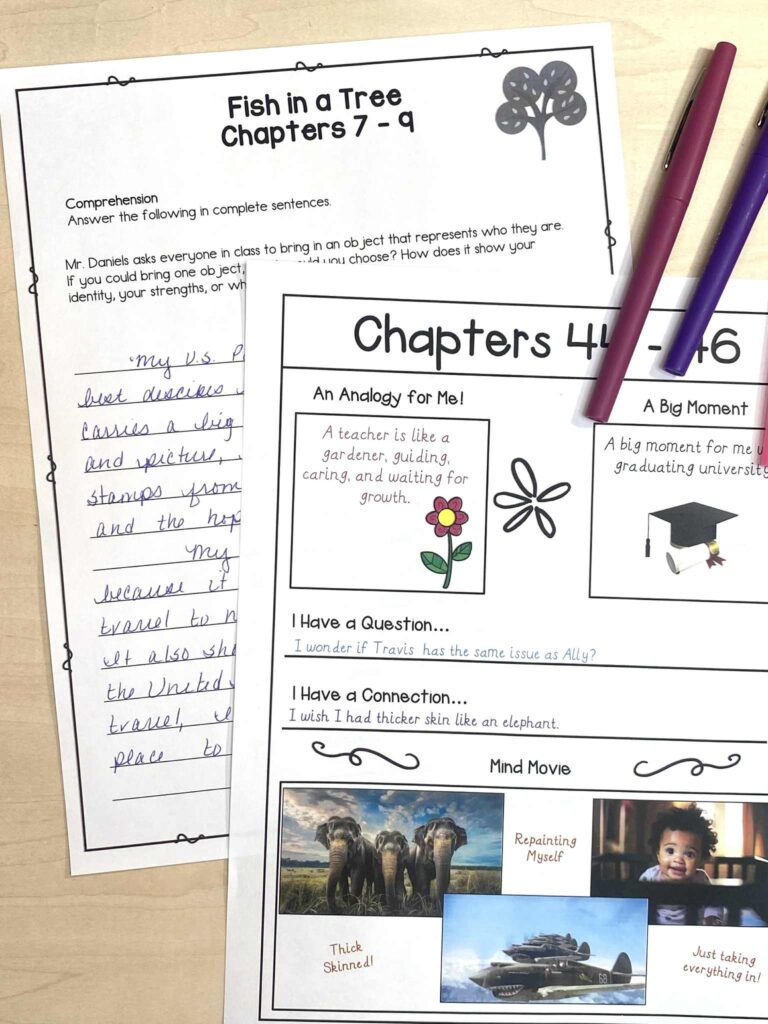
Mind Movie: draw the scene you pictured while reading, then label three text details
Character Snapshot: sketch a character and add three traits with evidence
Quote + Reaction: copy one meaningful quote and explain why it matters
Theme Tracker: list moments that show kindness, courage, or perseverance
These quick tasks keep your Fish in a Tree novel study meaningful and manageable.
Use theme-based writing prompts in your Fish in a Tree lesson plans
One of the reasons Fish in a Tree hits so hard is that the themes feel personal. Some students love that. Others freeze up. My favorite fix is giving a simple choice:
Write about your life OR write about a fictional character.
That one option removes pressure and helps kids write more freely, while still strengthening comprehension through reflection and text-based thinking.
Differentiate your Fish in a Tree novel study with a flexible sketchbook journal
Not every student shows understanding in the same way, and this novel practically begs us to teach with that in mind. A flexible sketchbook-style journal lets students respond using:
doodles, symbols, quick sketches
notes and questions
short written reflections
“Mind Movie” drawings
It’s open-ended enough for creativity, but still focuses on students’ comprehension of Fish in a Tree. It’s also one of the easiest ways to build differentiation into your lesson plans without additional planning.
Want it all done-for-you?
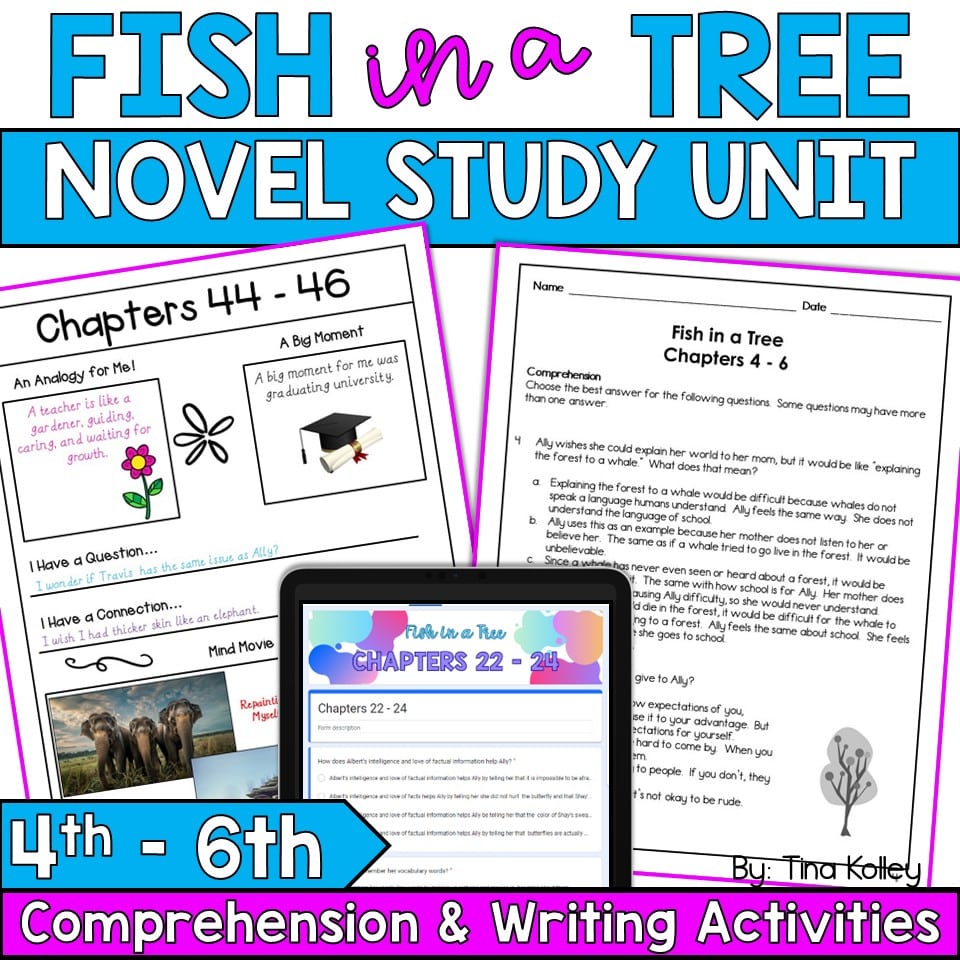
If you’re building your Fish in a Tree lesson plans and want low-prep, high-impact comprehension activities, I’ve put together a set that fits perfectly into your schedule, whether you have 15 minutes or a full class period.
Theme-based writing prompts (perfect for upper elementary reflection)
Flexible Sketchbook journal (student choice, creativity, and differentiation)
If you’ve been searching for Fish in a Tree activity ideas and an easy-to-implement Fish in a Tree novel study, these resources will help you teach the book with confidence, without turning it into a massive project.
Check out the Novel Here
Comprehension Questions
Comprehension, Journal, & Writing Activities
If you’re looking for another extraordinary novel for your Upper Elementary readers, I highly recommend Tuck Everlasting by Natalie Babbitt. It’s one of those stories that sparks the kind of big, thoughtful conversations Fifth Grade students love. Grab the book here, and check out my blog post, “7 Tuck Everlasting Activities,”here for easy, engaging ideas you can use as you read.
We use cookies to ensure that we give you the best experience on our website. If you continue to use this site we will assume that you are happy with it.